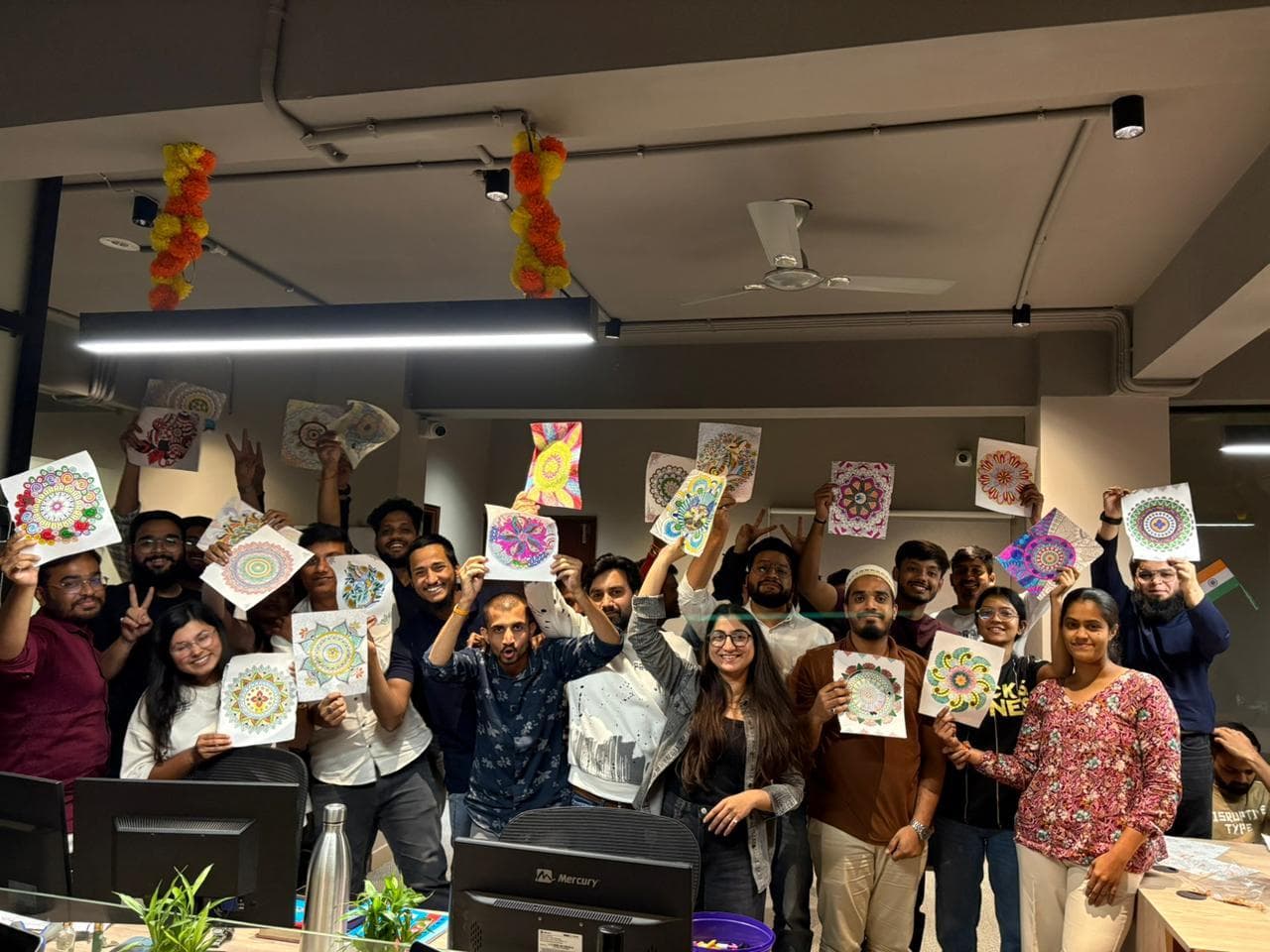

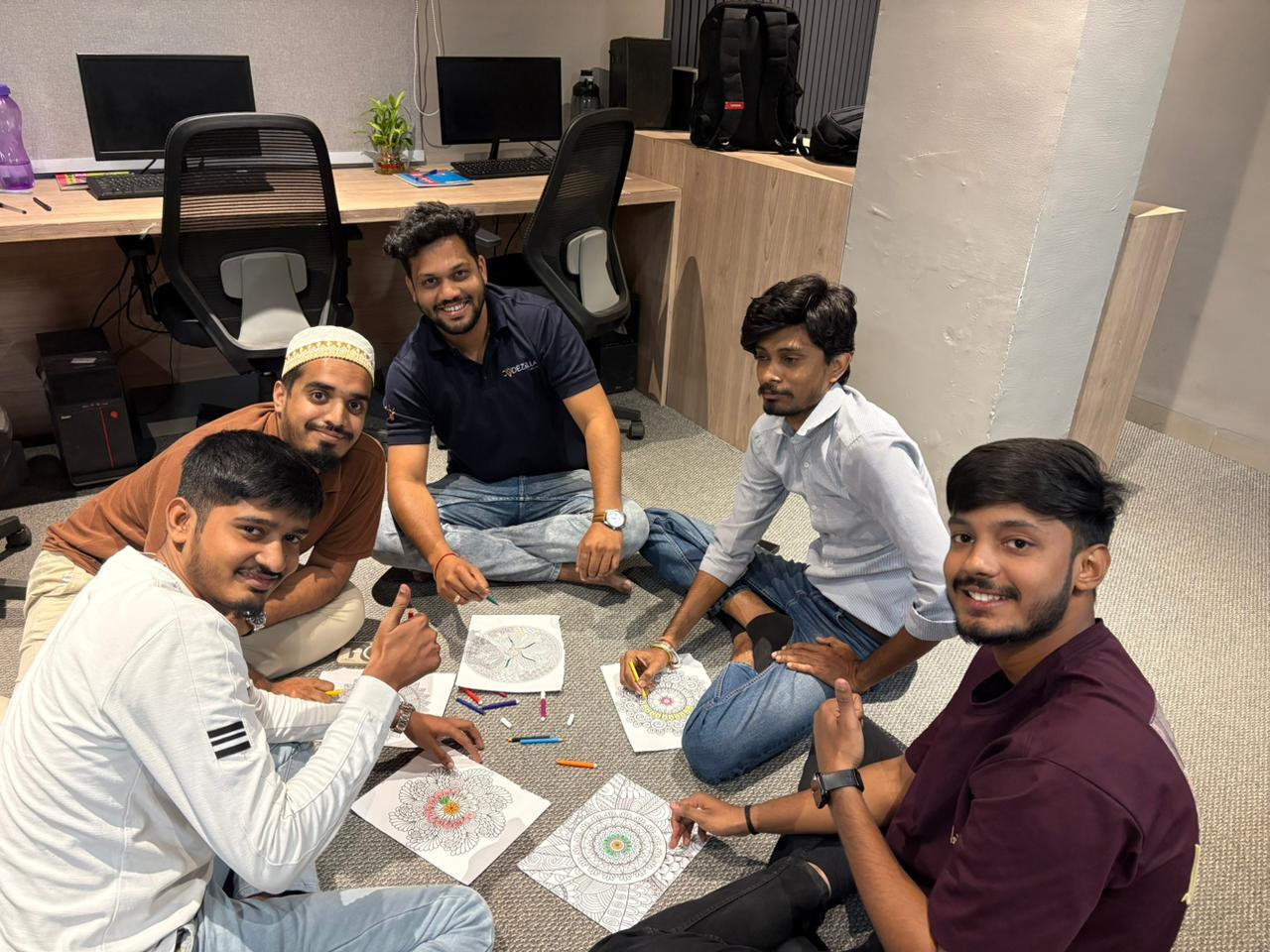
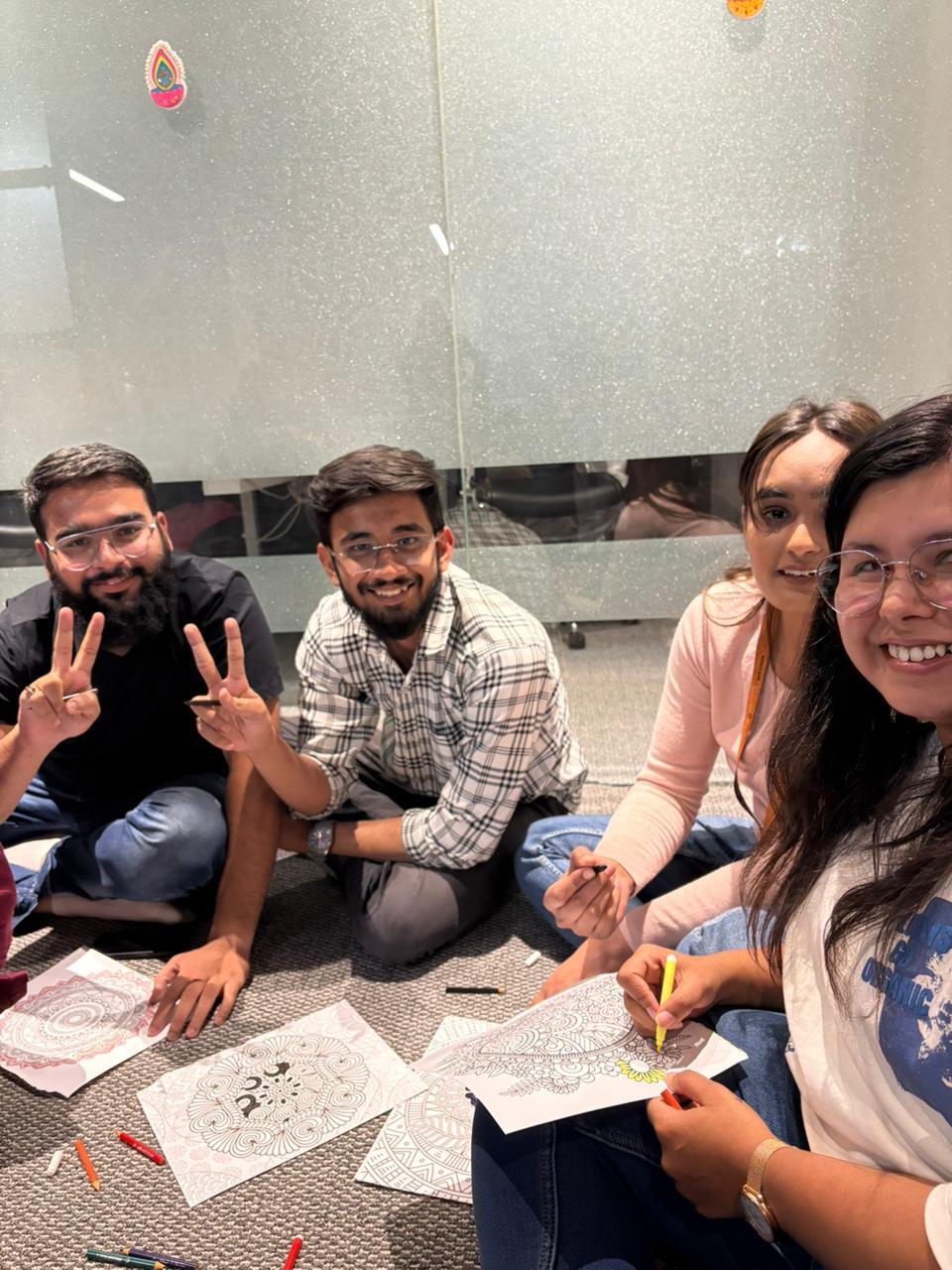
The concept was simple: mandala art. A clean table, a few supplies, and an offer for everyone at Codezilla to take a break from their screens and make something by hand. There is no prior experience required. There will be no final deliverable. What happened over those few hours was unexpected, and it served as a reminder that the strongest teams are founded not only on shared abilities but also on shared humanity.
Mandala artwork a theme, some supplies, a cleared-off table, and an open invitation to everyone on the Codezilla staff to show up and create something, no experience required. What ensued was one of the oddest, nicest, most incredibly meaningful afternoons we'd ever had as a team.
What We're Taking Forward
We didn't plan for this Friday to become something we'd write about. It wasn't designed to be a story. It was just an afternoon, casual, unforced, genuinely optional in spirit even if everyone showed up.
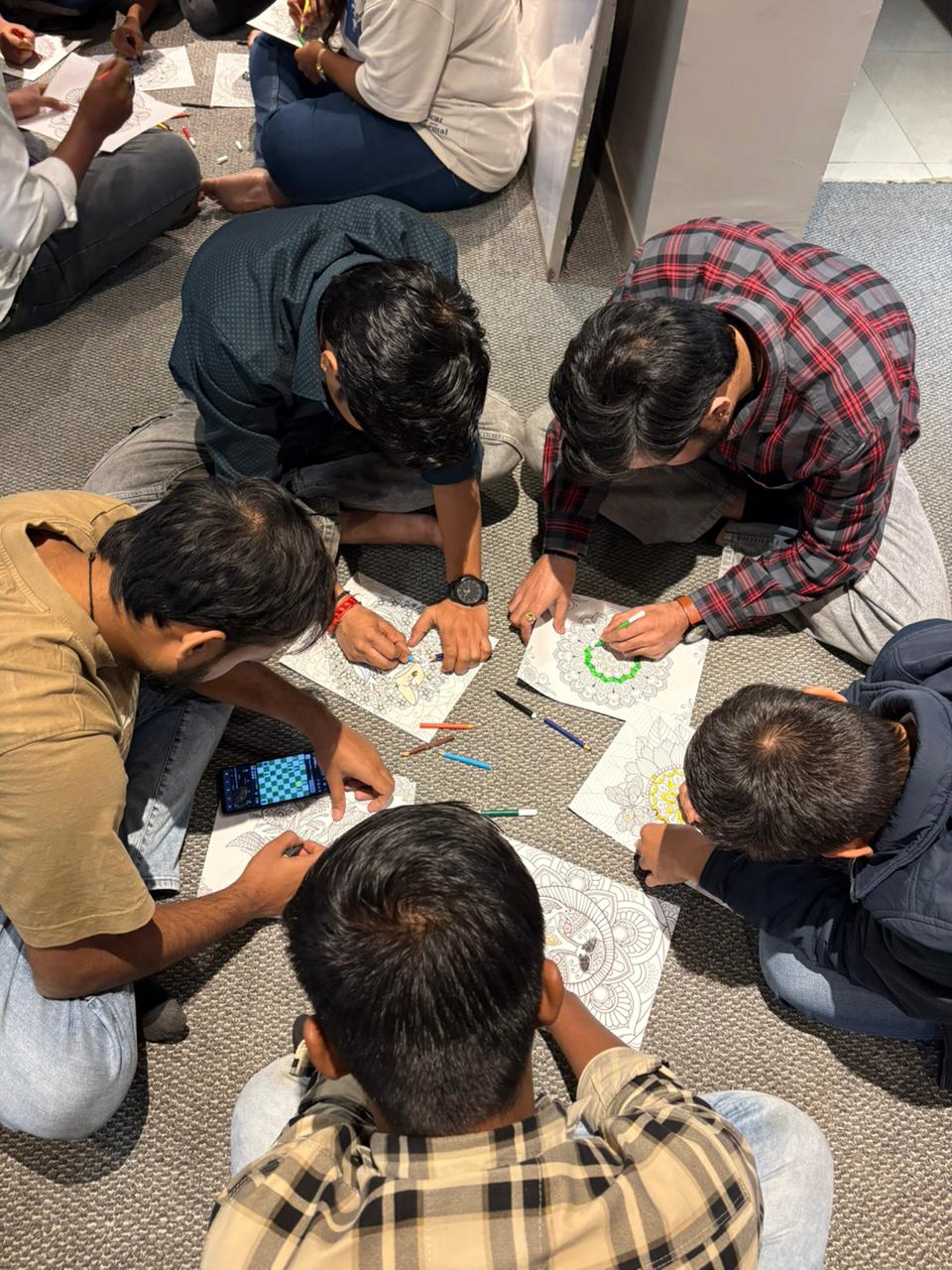
It became the afternoon when one of our best engineers remembered that he was also an artist. It became the afternoon, a room full of people who communicated largely through screens sat together and made things with their hands and felt the particular quiet satisfaction of that. It became proof that the Codezilla team is not just a collection of skills organized around a product roadmap; it is a group of actual human beings with hidden depths and forgotten talents and a genuine willingness to be present with each other.
Why This Afternoon Actually Mattered
Mandala art is an effective choice because it balances structure with creative flexibility. It provides a clear pattern, a defined center, and a consistent visual logic that makes it accessible to beginners. At the same time, it allows for individual interpretation, ensuring that each creation remains unique. It is an inclusive form of artistic expression that does not require extensive training. A pen, a central reference point, and the willingness to begin are all that is needed.
The radial symmetry of a mandala has a naturally calming effect. Repeating similar shapes, such as petals and lines, around a central point creates a steady rhythm that helps relax the analytical mind. Unlike high-pressure tasks such as sprints or debugging, which demand continuous problem-solving, mandala drawing promotes focus and mental clarity. It turns the creative process into a structured yet peaceful experience that supports balance and relaxation.
The Deeper Meaning Behind the Circle
The name "mandala" comes from Sanskrit and means "circle," but it also depicts totality, oneness, and the relationship between the individual and the infinite. Mandalas have long been employed in Tibetan Buddhism, Hinduism, and indigenous traditions around the world as a contemplative aid, a way of centring the attention within while simultaneously gesticulating outward.
Bringing that sensibility into a tech team has quite a radical edge. Not because we were meditating (we weren't), but because the structure of a mandala, everyone working from a shared center outward, each version distinct, is an amazingly perfect representation of how good teams actually work.
How to Bring This to Your Own Team
You don't need a grand gesture. You don't need a budget approval or a team offsite. You just need the belief that your people deserve an afternoon that asks nothing of them except to show up and create. Here's how to make it happen:
1. Set aside a Friday afternoon.
It only takes between two and three hours, but you should treat it as if it were an essential sprint. This is not filler. It is an investment in the people doing the task. Allow individuals enough space to settle, exhale, and establish their groove.
2. Keep the supplies simple and let your imagination shine.
Fine-tip pens, dotting tools, a compass or coin for a center point, and a few reference pages for visual inspiration. The materials' simplicity is intentional—it levels the playing field and allows the imagination to perform the heavy work. Coloured pens are appreciated but not essential.
3. Release your staff from the pressure to achieve perfection.
Before anyone writes anything, state unequivocally that there is no such thing as a wrong mandala. Mean it. When your team sincerely believes this, something happens: they are more likely to attempt, experiment, and surprise themselves. That willingness is precisely what you're here to cultivate.
4. End with a time of sharing.
Don't allow people to pack up and depart quietly. Allow the room to breathe for five minutes, with each participant holding up their creation and saying one thing about it. What fills that space will remain with your team long after the afternoon is over.
The Shared Language It Left Behind
"Mandala thinking" has become our shorthand for a system or solution built around a clean, clear center and everything else radiating outward with purpose and intention.
"Good geometry" is what someone says now when a meeting is focused, a design is elegant, or a plan genuinely makes sense from every angle.
Shared experiences create shared language. And shared language, in a team, is one of the most quietly powerful things there is. It means you've been somewhere together. That you have something that belongs only to you.
The mandalas themselves now live on our wall. Every one of them is different. Every one of them unmistakably is the person who made it.
Final Thoughts
It was an ordinary afternoon that became an extraordinary one, not because anything dramatic happened, but because something true did. It reminded us that the strongest teams are not built on shared skills alone. They are built on shared humanity, on the willingness to be present with each other, to be imperfect in front of each other, and to find meaning in something together that has nothing to do with output or velocity.
It was the afternoon Codezilla became a little more fully itself. Not the version defined by what it ships or how fast it moves. The fuller version. The one who knows why the work matters and, more importantly, who is doing the work with them.
It was the afternoon we stopped treating culture as a concept and started experiencing it as something real and lived and ours. Not a paragraph in a handbook. Not a set of values on a wall. A genuine, shared memory that belongs only to us.
It was the afternoon we made a quiet but firm decision that this kind of investment, in people, in presence, in the simple and profound act of creating something together, would not be a one-time event. It would become part of how we operate. Part of who we are.